
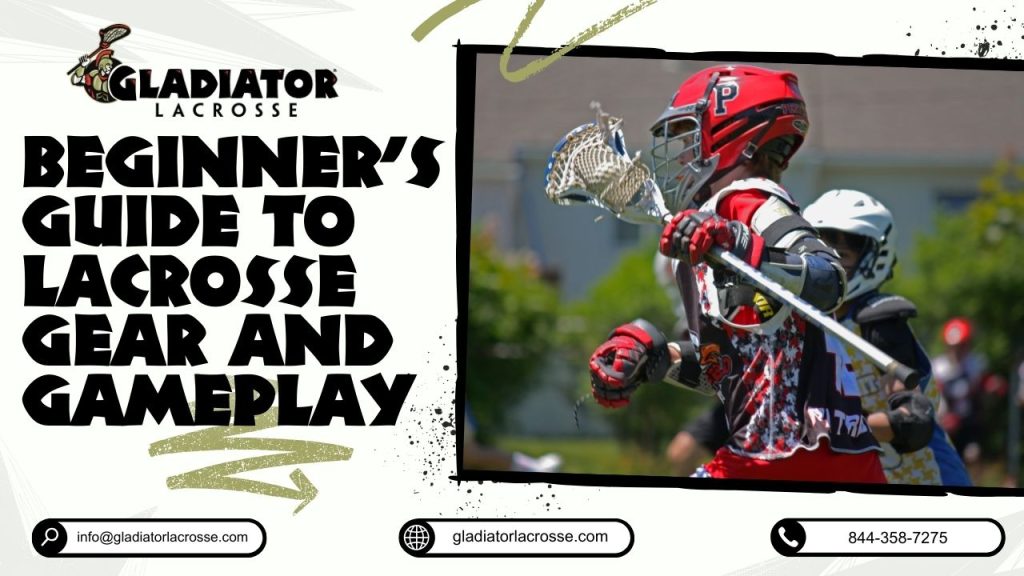
As a newcomer to lacrosse, you might feel overwhelmed by the equipment and rules. This guide will walk you through everything you need to know to get started. From essential gear to basic gameplay, we’ll cover it all. Companies like Gladiator Lacrosse have made quality equipment more accessible to beginners, helping grow the sport’s popularity.
Essential Lacrosse Equipment
The Lacrosse Stick
Your lacrosse stick is your most important piece of equipment. It consists of two parts: the shaft and the head. The shaft is typically made of lightweight metal, while the head is plastic with nylon or polyester mesh forming the pocket.
For beginners, it’s crucial to choose a stick that’s appropriate for your position and skill level. Attack and midfield players generally use shorter sticks (40-42 inches), while defenders and goalies use longer sticks (52-72 inches).
When selecting a stick, consider:
- Pocket depth: A deeper pocket offers more ball control but can make catching harder.
- Head shape: Wider heads are easier for beginners to catch with.
- Shaft material: Aluminum is lightweight and affordable, while carbon fiber offers better performance but at a higher cost.
Protective Gear
Safety is paramount in lacrosse. Here’s the protective equipment you’ll need:
- Helmet: A properly fitted helmet with a face mask is essential for all male players. Female players typically wear protective eyewear instead.
- Gloves: Lacrosse gloves protect your hands and wrists from checks and errant passes.
- Shoulder Pads: These protect your upper body from checks and collisions.
- Arm Pads: Arm guards shield your elbows and forearms.
- Mouthguard: Protects your teeth and reduces concussion risk.
- Athletic Cup: Male players should wear a protective cup.
- Cleats: Lacrosse-specific or soccer cleats provide traction on the field.
For goalies, additional equipment includes a throat guard, chest protector, and shin guards.
Understanding the Field
A standard lacrosse field is 110 yards long and 60 yards wide. Key areas include:
- Goal: A 6×6 foot square net at each end of the field.
- Crease: A 9-foot radius circle around each goal.
- Midfield Line: Divides the field in half.
- Restraining Lines: 20 yards from each end line, these limit the number of players in the offensive and defensive zones.
Basic Rules and Gameplay
Lacrosse is a fast-paced game combining elements of basketball, soccer, and hockey. Here are the fundamentals:
- Objective: Score more goals than the opposing team by shooting the ball into their goal.
- Players: 10 players per team on the field (3 attackmen, 3 midfielders, 3 defenders, 1 goalie).
- Game Duration: Typically four 15-minute quarters for men, two 25-minute halves for women.
- Face-offs: Used to start each quarter and after goals.
- Possession: Players can carry, pass, or shoot the ball using their sticks.
- Checking: Defensive players can use their sticks to check opponents’ sticks and dislodge the ball. Body checking is allowed in men’s lacrosse under certain conditions.
- Offsides: Teams must keep at least four players in their defensive half and three in their offensive half at all times.
- Penalties: Infractions result in time-serving penalties, giving the other team a player advantage.
Basic Skills to Master
Cradling
Cradling is the back-and-forth motion used to keep the ball in your stick while running. It’s a fundamental skill that every player needs to master. Practice cradling with both hands, as you’ll need to switch hands frequently during play.
Passing
Accurate passing is crucial in lacrosse. Use a reliable Lacrosse rebounder on your solo-practices. When passing:
- Step towards your target
- Rotate your upper body
- Follow through with your stick pointing at your target
Start with short passes and gradually increase distance as you improve.
Catching
To catch effectively:
- Present a target with your stick
- Keep your eyes on the ball
- “Give” with your stick as the ball enters to soften the impact
Practice catching with both your strong and weak hands.
Shooting
Shooting technique varies based on the situation, but generally:
- Approach the goal at an angle
- Plant your lead foot
- Rotate your hips and shoulders
- Follow through towards the target
Practice different types of shots: overhand, sidearm, and underhand.
Ground Balls
Retrieving ground balls is a critical skill. To pick up a ground ball:
- Approach the ball at an angle
- Get low, with your knees bent
- Place the head of your stick flat on the ground
- Scoop through the ball and run
Drills for Improvement
Consistent practice is key to improving your lacrosse skills. Here are some effective drills:
Wall Ball
Wall ball is one of the best ways to improve your stick skills. Find a flat wall and practice throwing and catching. Focus on:
- Overhand throws
- Sidearm throws
- Quick sticks (catch and throw without cradling)
- Behind-the-back throws
Aim to do at least 50 repetitions with each hand daily.
Partner Passing
Work with a teammate to improve your passing and catching:
- Start close and gradually increase distance
- Practice stationary passing, then incorporate movement
- Add in ground balls and bounce passes
Shooting Drills
To improve your shooting:
- Set up targets in the goal (you can use cones or hang objects from the crossbar)
- Practice shooting from different angles and distances
- Incorporate dodges before shooting to simulate game situations
Footwork Drills
Good footwork is essential for all aspects of lacrosse:
- Ladder drills to improve agility
- Shuttle runs for speed
- Defensive sliding drills to practice proper defensive positioning
Understanding Positions
Each position in lacrosse has specific responsibilities:
Attack
Attackmen are the primary scorers. They need excellent stick skills and the ability to create scoring opportunities for themselves and their teammates.
Midfield
Midfielders play both offense and defense. They need to be well-rounded players with good endurance, as they cover the entire field.
Defense
Defenders focus on preventing the opposing team from scoring. They need good footwork, communication skills, and the ability to throw effective checks.
Goalie
The goalie is the last line of defense. They need quick reflexes, good hand-eye coordination, and the ability to direct the defense.
Strategy and Tactics
As you become more comfortable with the basics, you’ll want to learn more about strategy:
Offense
Offensive strategies often involve creating and exploiting mismatches:
- Dodging to beat defenders one-on-one
- Setting picks to free up teammates
- Cutting to open spaces to receive passes
Defense
Defensive strategies focus on containing the offense and forcing turnovers:
- Sliding to help teammates who get beaten
- Communication to coordinate the defense
- Forcing attackers to their weak hand
Transition
Fast breaks and clearing the ball efficiently can lead to easy scoring opportunities. Practice transitioning from defense to offense quickly.
Nutrition and Fitness
Lacrosse is a demanding sport that requires both endurance and explosive power. To perform your best:
- Stay hydrated before, during, and after practices and games
- Eat a balanced diet rich in lean proteins, complex carbohydrates, and healthy fats
- Incorporate both cardio and strength training into your off-field workouts
Joining a Team
To truly experience lacrosse, join a team. Look for:
- Youth leagues in your area
- School teams (many high schools and colleges have lacrosse programs)
- Adult recreational leagues for older beginners
Watching and Learning
Watching high-level lacrosse can help you understand strategy and improve your game. Follow college lacrosse and professional leagues like the Premier Lacrosse League (PLL) or National Lacrosse League (NLL).
Lacrosse is an exciting, fast-paced sport that offers something for everyone. With the right equipment, understanding of the rules, and practice of fundamental skills, you’ll be well on your way to enjoying this great game. Remember, companies like Gladiator Lacrosse offer quality training equipment to help you improve your skills at home. So grab your stick, hit the field, and start your lacrosse journey today!