
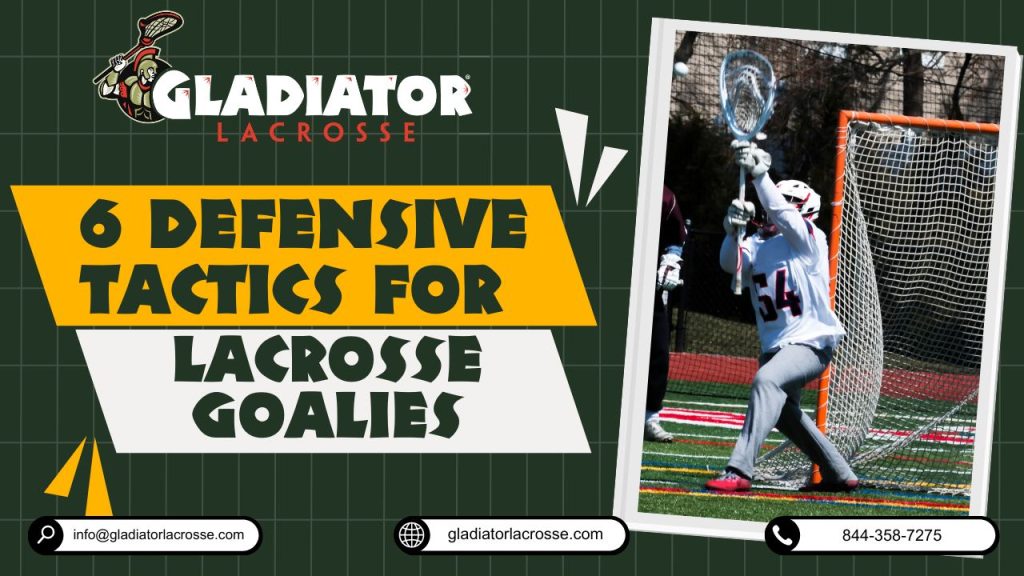
Lacrosse goalies are the last line of defense, tasked with protecting the net and organizing the defense. Their role is crucial, requiring a combination of physical skills, mental fortitude, and strategic thinking. Whether you’re practicing with Gladiator Lacrosse equipment or facing off against tough opponents, mastering these six defensive tactics for lacrosse goalies will elevate your game and make you a formidable presence in the crease.
1. Perfect Your Stance and Positioning
The foundation of solid goalie play starts with proper stance and positioning. A strong stance allows for quick reactions and efficient movement, while correct positioning puts you in the best spot to make saves.
Key elements of a good goalie stance:
- Feet shoulder-width apart
- Knees slightly bent
- Weight on the balls of your feet
- Hands relaxed, with your stick in a ready position
Proper positioning involves aligning yourself with the ball and the goal. As the ball moves, adjust your position to maintain this alignment. This concept, known as “playing the arc,” helps you cover the most net possible from any shooting angle.
Practice your stance and positioning regularly, both with and without equipment. Use lacrosse goals to simulate game situations and improve your spatial awareness. Even when you’re not on the field, you can work on your stance at home or in the gym to build muscle memory.
2. Master Save Techniques
Goalies need a variety of save techniques to handle different types of shots. The three primary save techniques are:
- Step-and-save: Move towards the ball while bringing your stick to meet it.
- Turn-and-drop: Rotate your body and drop to one knee to block low shots.
- Pop-and-drop: Quickly drop to both knees to stop bounce shots.
Each technique has its advantages and is suited for different game situations. Practice these techniques regularly using a beginner lacrosse target or with teammates taking shots on you. Focus on proper form and gradually increase the speed and variety of shots you face.
Remember, making a save is only half the battle. Work on your ability to control rebounds and quickly clear the ball to your teammates after a save. This skill can turn a defensive stop into an offensive opportunity for your team.
3. Develop Quick Hands and Feet
Agility and hand-eye coordination are crucial for lacrosse goalies. Quick hands allow you to react to shots in a split second, while nimble feet help you move efficiently within the crease.
To improve hand speed:
- Practice wall ball drills focusing on quick catches and throws
- Use a reaction ball or tennis ball for unpredictable bounces
- Work with smaller balls to challenge your hand-eye coordination
For footwork:
- Set up an agility ladder or cones for foot speed drills
- Practice shuffling and sliding within the crease
- Incorporate plyometric exercises into your training routine
Combine hand and foot drills using portable lacrosse goals. Set up multiple targets and practice moving between them while making saves. This will help you develop the ability to quickly reposition and make consecutive saves during game situations.
4. Communicate Effectively with Your Defense
A goalie’s role extends beyond just making saves. You’re the quarterback of the defense, responsible for organizing and directing your teammates. Effective communication can prevent scoring opportunities before they happen.
Key aspects of goalie communication:
- Call out offensive formations and player movements
- Direct defenders to cover open attackers
- Warn of picks and screens
- Coordinate slides and help defense
Develop a clear, loud voice that can be heard over the noise of the game. Create a set of simple, concise commands that your team can easily understand and respond to. Practice these commands during team drills and scrimmages to build rapport with your defenders.
Remember, communication is a two-way street. Encourage your defenders to provide information about what they see on the field, creating a more cohesive and responsive defensive unit.
5. Study Offensive Patterns and Tendencies
To truly excel as a goalie, you need to think like an attacker. Study offensive patterns and individual player tendencies to anticipate shots and make better saves.
Ways to improve your game IQ:
- Watch game film of opponents and top-level players
- Analyze different offensive formations and how they create scoring opportunities
- Learn to read shooters’ body language and stick positioning
- Understand common shot selection based on field position
During practices, have your teammates run various offensive plays against you. This will help you recognize patterns and improve your ability to predict shots in game situations.
Pay attention to individual shooters as well. Many players have preferred shot types or locations. By recognizing these tendencies, you can better position yourself and increase your chances of making saves.
6. Develop Mental Toughness and Short-term Memory
Playing goalie can be mentally challenging. You’re often the last line of defense, and goals scored against you are highly visible. Developing mental toughness and the ability to quickly move past mistakes is crucial for long-term success.
Strategies for building mental resilience:
- Practice mindfulness and visualization techniques
- Set realistic goals and focus on personal improvement
- Learn from mistakes without dwelling on them
- Develop pre-game and in-game routines to maintain focus
Work with your coaches and teammates to create a supportive environment that allows you to play confidently and bounce back from setbacks. Remember that even the best goalies get scored on; it’s how you respond to these moments that defines your success.
Incorporate mental training into your regular practice routine. Simulate high-pressure situations and practice maintaining composure and focus. This could involve facing a rapid series of shots or playing in mock “overtime” scenarios.
In conclusion, mastering these six defensive tactics will significantly improve your performance as a lacrosse goalie. From perfecting your stance and save techniques to developing mental toughness, each aspect plays a crucial role in your overall effectiveness on the field.
Remember, consistent practice is key to improvement. Whether you’re working with Gladiator Lacrosse equipment or practicing with your team, dedicate time to honing these skills. With dedication and the right approach, you’ll become a formidable presence in the crease and a valuable asset to your team.