
Nothing on a Lacrosse Goal Breaks Except the Cheap Bits
A steel goal frame is close to indestructible in a backyard. It’ll take a decade of shooting, a few winters, and being dragged around to mow the lawn. What fails is everything attached to it: the cord, the fasteners, the net, the small pieces of hardware nobody thinks about until one goes missing.
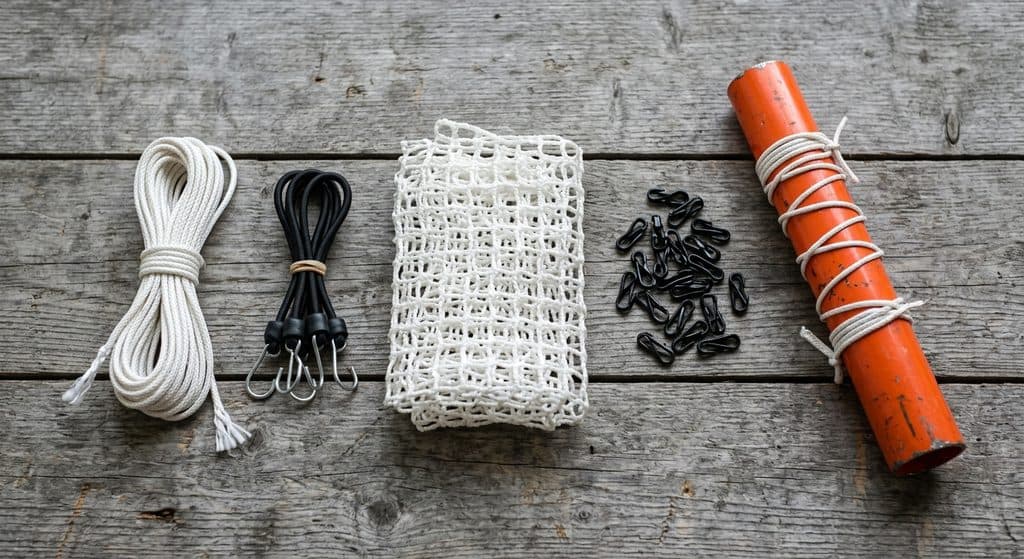
Lacrosse goal replacement parts fall into two groups. Consumables, lacing cord, bungee fasteners, nets, and rebounder clips, are stocked as ordinary products and you just order them. Structural frame pieces aren’t sold on the site, and for those you email the parts team directly. Knowing which group your problem falls into saves you a lot of time.
That second half is the part almost nobody knows about, so let’s start with what actually goes wrong.
Which lacrosse goal replacement parts fail first
Roughly the order you’ll meet these.
Lacing cord. The consumable that fails most, and the one people ignore longest. Cord goes stiff, then frays, then snaps somewhere inconvenient. It wears out well before the net does, which is why it’s sold separately. If your goal has been standing for two seasons, the cord is already past its best whether or not it has broken.
Net attachment points. Sometimes the net is fine and the thing holding it on has given up. Worth checking before you spend on a whole net, because it’s a much cheaper fix.
The net itself. Sun degrades twine, ground balls hammer the bottom edge, and tension works on the corners continuously. Nets are the real recurring cost on a goal. The net thickness guide covers which gauge to replace with.
Small hardware. Clips, pins, fasteners. Tiny, cheap, and completely disabling when one goes. This is the category where people wrongly conclude the whole unit is finished.
The frame. Rarely. Surface rust is cosmetic and treatable. A bent tube or a failed weld is a different conversation, and that’s where the next section matters.
Which lacrosse goal replacement parts you can just buy
These are stocked as normal products. No process, no email, just order them.
| Part | What it’s for | Sold as |
|---|---|---|
| Goal lacing cord | Attaching a lace-on net to the frame | Single, white, for official 72″ x 72″ goals |
| Goal fastener bungee cords | Securing netting and target panels; fast repairs to failed lacing | Bundle of 24, black |
| Replacement nets | The net itself, 5.0 mm through 7.0 mm | Round, square and universal corner styles |
| Rebounder replacement clips | Securing a rebounder’s surface to its frame | Set of 24 black metal clips |
Goal lacing cord is the one to keep spare. It’s the cheapest thing on this page and it’s the thing most likely to end a practice session.
Goal fastener bungee cords come twenty-four to a bundle and do two jobs. They attach target panels, and they’re a fast field repair when lacing has failed in a few spots and you don’t want to re-lace the whole net. If you’d rather not lace at all, a Velcro net skips cord entirely.
Replacement nets run from 5.0 mm to 7.0 mm. One honest note on the ladder: there’s no standalone 3.0 mm replacement net, so if your goal shipped with the thinnest net, replacing it means stepping up a tier.
Rebounder replacement clips are worth knowing about if you own a rebounder, because a missing clip makes the whole surface sag and looks far more terminal than it is.
If the job is fitting a net rather than sourcing one, the lacing guide walks the sequence.
When the part you need isn’t listed
Here’s the bit competitors can’t match, and it’s genuinely useful.
Every parts page in this industry is a product grid. It works fine until the thing you need isn’t in the grid, and then it’s a dead end. Which is exactly when you need help, because a goal missing one structural piece is unusable.
Gladiator runs a support request page with a dedicated address for replacement parts, scoped specifically to its goals and rebounders. There’s also a separate address for requesting a copy of an instruction manual, which is the other thing people lose.
So the rule is simple. Consumables are SKUs. Structural frame pieces are a conversation. If you can’t find the part, that’s not because you’re looking in the wrong place. It’s because it isn’t sold that way, and there’s a channel for it.
When you get in touch, have ready which goal you own, which piece has failed, and roughly when you bought it. That’s the information that makes the reply useful rather than a round of questions.
Why a broken fastener is more than untidy
Worth understanding, because it changes how urgent this feels.
The NCAA men’s rulebook requires the net to be fastened to the goal posts and crossbar, with the net’s mesh openings not exceeding an inch and a half. The women’s rulebook adds that no hole or gap may be large enough for a ball to pass through.
So a snapped cord or a failed fastener isn’t a cosmetic problem. It’s a goal that no longer meets the specification it was bought to meet. In a backyard that means arguments about whether a shot counted. In any organised game it’s an actual problem.
That’s the real argument for keeping a spare bundle of cord in the garage: the failure is cheap to fix and annoying to discover mid-season.
What the warranty does and doesn’t cover
Stated plainly, because it’s relevant to whether you repair or claim.
Gladiator’s warranty covers manufacturing defects for 90 days from purchase, with repair or replacement at their discretion, and the buyer covers shipping on a claim. It excludes normal wear and tear.
Which means the honest reading is this: a part that failed because it was faulty is a warranty question in the first three months. A part that failed because it spent two summers in the sun is a consumable, and consumables are cheap for exactly that reason. The warranty page has the full terms.
A spares kit worth keeping
If you own a goal that lives outside, three things in a box in the garage will cover most of what goes wrong:
- A spare pack of lacing cord. The single highest-value spare.
- A bundle of bungee fasteners. Fast repairs, and they attach targets too.
- A net one tier thicker than your current one, if yours is ageing and you already know the weather is winning.
None of that is expensive, and it’s the difference between a two-minute fix and a lost weekend.
Bottom line
Frames outlast everything bolted to them, so plan for cord, fasteners and nets rather than for the goal. Buy the consumables off the shelf and keep spares of the cheap ones. And if the part you need isn’t listed, that’s the signal to use the parts channel rather than to assume the goal is finished. Structural pieces aren’t sold as SKUs, but they do exist.
A Word on Gladiator Lacrosse
Gladiator Lacrosse was founded in 2012 by Rachel Zietz, then a 13-year-old player in Boca Raton whose backyard gear kept failing. Equipment surviving real use was the original design brief, which is why the parts that wear out are sold separately rather than forcing a whole replacement.
Goal lacing cord and goal fastener bungee cords are stocked individually, replacement nets run 5.0 mm through 7.0 mm in round, square and universal corner styles, and anything not listed goes through the support page.
You Might Also Like
- Replacement nets — thicknesses, corner styles and attachment types
- Lacrosse goal maintenance — the inspections that catch failures early
- How to lace a lacrosse net — fitting a new net once you’ve got one
FAQ
What lacrosse goal replacement parts can you buy separately? The consumables: goal lacing cord, goal fastener bungee cords in bundles of 24, replacement nets in 5.0 mm through 7.0 mm, and rebounder replacement clips. These are stocked as ordinary products. Structural frame pieces aren’t sold as individual SKUs and are handled through the support page instead.
What breaks first on a lacrosse goal? Lacing cord, almost always. It goes stiff, frays and then snaps, and it wears out well before the net does. After that it’s the net’s bottom edge and corners, then small hardware like clips and fasteners. Frames very rarely fail. Surface rust is cosmetic, and a bent tube or failed weld is the uncommon exception.
What do you do if the lacrosse goal part you need isn’t listed? Use the support page, which has a dedicated address for replacement parts covering Gladiator’s goals and rebounders. Structural frame pieces aren’t sold as individual products, so not finding one in the shop is expected rather than a dead end. Have your goal model, the failed part and your rough purchase date ready.
Do you have to replace the whole net if it’s only come loose? No, and it’s worth checking before you spend. If the twine is sound and only the attachment has failed, new lacing cord or a bundle of bungee fasteners fixes it. Replace the net itself when the twine has gone brittle or chalky, or when there’s a hole large enough for a ball to pass through.
Are lacrosse goal parts covered by warranty? Gladiator’s warranty covers manufacturing defects for 90 days from purchase, with the buyer covering shipping on a claim, and it excludes normal wear and tear. So a genuinely faulty part is a warranty question early on, while cord and fasteners that have aged in the sun are consumables. Which is why they’re sold cheaply and separately.