
The Ball in the Bucket Is Doing a Different Job
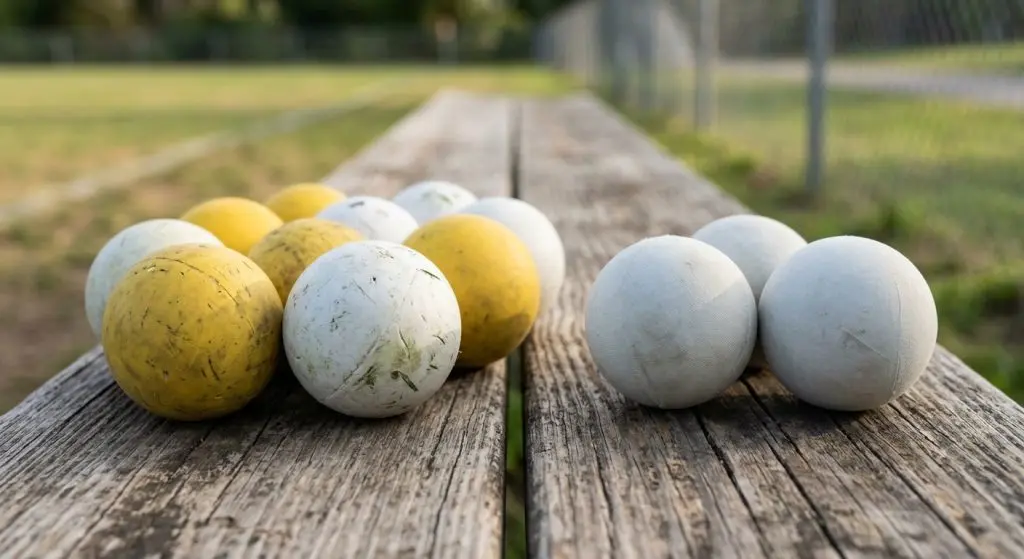
Walk past any club practice and you’ll see two piles of balls. There’s the bucket everyone grabs from, full of scuffed ones that have been kicked around a field for two seasons. And there’s a smaller bag nobody touches, which comes out on game day.
Lacrosse practice balls and game balls are usually the same specification. The difference is condition and how they’re used, not construction. Soft weighted training balls are the genuinely different product: same size and roughly the same weight as a standard ball, but they don’t bounce and won’t damage a floor, so they work indoors where a hard ball can’t. Knowing which pile you’re buying for is the whole decision.
That sounds simple until you try to buy for a garage in January.
What separates a practice ball from a game ball
Not much, physically, and that surprises people.
A standard lacrosse ball is solid vulcanised rubber built to one specification. The ball in your practice bucket and the ball the referee hands out started life identical. What separates them is wear.
A ball that’s spent two seasons on a field gets scuffed, picks up grit, and — if it was a cheap ball to start with — can go slick as the plasticisers in the rubber migrate to the surface. That changes how it sits in a pocket and how it comes off a stick. Which is exactly why programs keep two piles: game balls stay fresh so they behave predictably, and practice balls get demoted into the bucket as they age.
So “practice balls” is usually a role, not a product category. Buy the same quality ball and manage the rotation.
There is one genuine exception, and it’s the useful part of this post.
Soft training balls are actually different
A soft weighted training ball is a real departure from a standard ball rather than a cheaper version of one.
The Swax Lax Soft Weighted Lacrosse Training Ball that Gladiator stocks weighs 142 to 149 grams and measures 64 millimetres across, which puts it in the same size and weight range as a regulation ball. Inside, though, it’s a sand-and-rubber fill with a soft fabric exterior instead of solid vulcanised rubber.
That construction produces one property that changes everything about where you can use it: it doesn’t bounce. Drop it and it stays put. Which means it’s safe on a hardwood gym floor, and it’s the reason it can be used in spaces a hard ball would wreck.
The weight matching matters more than it sounds. A foam ball teaches a player to throw and catch something that doesn’t feel like a lacrosse ball, and the habits don’t transfer cleanly. A ball at regulation weight in a non-bouncing package trains the same motion.
The one thing to know before buying it: it’s designed to work with a rebounder, and it is explicitly not suited to wall ball against a hard wall. If your plan is a kid throwing against the side of the garage all winter, this is the wrong ball for that specific job. It’s also not intended for children under four.
When lacrosse practice balls should be soft, hard, or both
| Situation | Use | Why |
|---|---|---|
| Outdoor field or backyard practice | Standard hard balls | Same ball they’ll play with; nothing indoors to damage |
| Wall ball against a hard wall | Standard hard balls | Soft training balls aren’t suited to wall work |
| Indoor gym, hardwood floor | Soft weighted training balls | Won’t bounce, won’t mark the floor |
| Garage or basement in winter | Soft weighted training balls | The realistic option when a hard ball isn’t |
| Working with a rebounder | Either — soft balls are compatible | Lets winter practice continue indoors |
| Very young players learning to catch | Soft weighted training balls | Removes the fear that shortens a session |
| Game day | Fresh standard balls | Predictable behaviour matters most here |
| Team practice, high volume | Standard balls bought by the case | Volume is what drives reps |
The honest read for most households is that you want both, for different months of the year.
How many lacrosse practice balls you actually need
More than you have. This is the most common under-buy in the sport.
A player with a single ball spends their practice time walking. Miss the target, go find it, come back, repeat. That session ends early, every time, and it ends early because of logistics rather than motivation.
A player with a dozen throws a dozen, then collects. The difference in actual reps per hour is large, and it costs very little to fix. Gladiator’s ball lineup runs from singles and small packs through boxes of twelve to cases of 120, and for anyone past the first season the box is the sensible unit rather than the pack.
If you’re buying at volume, a ball bag stops the collection turning into an armful. For programs specifically, the sizing maths for a whole roster is a different calculation, because sidelines, drills and loss all compound.
When to retire a ball
Practice balls demote themselves, and there’s a point where they should leave the bucket entirely.
Check the surface with your thumb. A ball in good condition is smooth or slightly textured and has grip. A ball that feels faintly waxy or slides under your thumb has gone slick, and it can’t meaningfully be cleaned back. At that point it’s changing how every rep with it feels, which is the opposite of what practice is for.
Grit is the other one. A ball caked in dried mud is abrasive against mesh, and it’ll wear a pocket faster than the player will.
None of that is about certification, which is a separate question entirely. If you want to know what the marking on the ball means and which balls are legal for game play, that’s covered in the NOCSAE certification guide.
Bottom line
For most players, practice balls and game balls are the same ball at different stages of life, so buy decent balls in volume and rotate the worn ones into the bucket. Add soft weighted training balls if winter practice happens indoors, on a gym floor, or with a rebounder, just not against a wall. And buy more than you think, because the number of balls in the bag is what decides how long a practice session lasts.
A Word on Gladiator Lacrosse
Gladiator Lacrosse was founded in 2012 by Rachel Zietz, then a 13-year-old player in Boca Raton whose coaches told her to practise as much as possible and whose gear kept failing. The catalogue is lacrosse-only: official-size steel-framed goals, replacement nets in four twine thicknesses, shooting targets, rebounders, and balls.
The ball range is 100% premium vulcanised rubber, meets NOCSAE standards and is SEI certified, and runs from singles up to cases of 120 for programs, with a ball bag to carry them. The Swax Lax Soft Weighted Training Ball is stocked alongside them for indoor and younger-player use, in singles, three-packs and cases.
You Might Also Like
- Lacrosse balls — singles through cases, plus soft training balls
- What a NOCSAE certified lacrosse ball means — the marking, the standard, and which balls are legal
- Lacrosse wall ball routine — what to actually do with all those balls
FAQ
What’s the difference between lacrosse practice balls and game balls? For standard balls, usually nothing structural. They’re the same solid rubber specification, and the difference is condition. Game balls are kept fresh so they behave predictably; practice balls are the ones that have been worn in on a field. Soft weighted training balls are the genuine exception, built differently so they can be used indoors.
Can you use soft lacrosse balls for wall ball? No. Soft weighted training balls are designed to work with a rebounder rather than against a hard wall, so wall ball is the one job they’re not suited to. For wall work against brick or concrete, use standard hard balls and expect to replace them as they scuff.
Are soft lacrosse training balls the same weight as real ones? Close. The Swax Lax soft weighted training ball is 142 to 149 grams and 64 millimetres across, which falls in the same size and weight range as a standard lacrosse ball. The difference is the fill: sand and rubber inside a soft fabric exterior rather than solid vulcanised rubber, which is why it doesn’t bounce.
How many lacrosse balls should you buy? More than feels necessary. A player with one ball spends most of a session retrieving it and stops early; a player with a dozen keeps going. For an individual past their first season, a box of twelve is the sensible unit. Programs buy by the case, since sideline stock, drills and simple loss all compound.
When should you throw away a lacrosse ball? When the surface goes slick. Run a thumb across it. A good ball is smooth or slightly textured with grip, while a worn one feels faintly waxy and slides. That change affects how the ball sits in the pocket and comes off the stick, and it can’t be cleaned back. Caked mud is the other reason, since grit abrades mesh.