
There’s a specific moment every lacrosse parent hits. Your kid has been playing for a season, maybe two. They’re into it. And now there’s a link in your text messages to a piece of backyard equipment that costs more than their stick, their cleats, and half their gear bag combined.
A lacrosse rebounder is worth buying when a player already practices on their own without being asked. It replaces a throwing partner, so a committed player gets hundreds of extra reps a week they otherwise wouldn’t. If your child only touches a stick at team practice, buy more balls and wait a season. The equipment doesn’t create the habit.
That’s the honest answer, and it’s not the one most buying guides give you. Here’s how to tell which situation you’re actually in.
The question behind the question
You’re not really asking whether rebounders work. They do. A player who throws and catches a few hundred times a day gets better than one who doesn’t, and that’s not controversial.
What you’re actually asking is: will this specific kid use this specific thing? That’s a question about your child, not about the product, and no product page can answer it for you.
So here are the honest signals, in both directions.
Buy it if: they practice without being told. They’ve asked more than once, over more than a month. They’ve got a season or two in and they’re still choosing lacrosse when other sports are available. Or they physically can’t practice any other way, because the only wall you own is drywall and the neighbor’s fence is twelve feet away.
Wait if: the ask arrived the week after a highlight video. It’s their first season. They’re still deciding between three sports, which is completely normal and healthy at that age. Or the enthusiasm is real but the practice habit isn’t there yet, which happens constantly and doesn’t mean anything bad about your kid.
One more that’s worth saying out loud: if you’re buying it hoping it will make them practice, it won’t. Equipment follows motivation. It doesn’t generate it.
What to buy first if you’re only buying one thing
Most parents don’t buy the whole setup at once, and shouldn’t. Here’s a reasonable order, based on how much practice each piece unlocks per dollar and per square foot of yard.
| Buy this first | Why | Who it’s for |
|---|---|---|
| A pack of balls | The cheapest thing that reliably increases reps. One ball means chasing it down the street after every miss, and a kid who chases the ball fifty times will quit after ten minutes. | Literally everyone, at any stage |
| A rebounder | Replaces a throwing partner entirely. Works in a small yard. This is the piece that turns “I have nobody to throw with” into a solved problem. | A player who already practices solo |
| A goal | Shooting practice needs a target and something to stop the ball. Bigger footprint, and a player needs enough stick control to be shooting before it earns its space. | A player past the fundamentals stage |
| A shooting target | Turns an existing goal into an accuracy tool. Cheap add-on, real training value. | Anyone who already owns a goal |
If your budget only stretches to one item this year, and your kid is still building stick skills, the balls-then-rebounder order beats buying a goal first almost every time. Wall work builds the hands. Shooting at a goal is more fun, which matters too, but it’s the thing that improves after the hands do.
The costs that aren’t on the price tag
This is the part parent-facing content usually skips, and it’s where the actual surprises live.
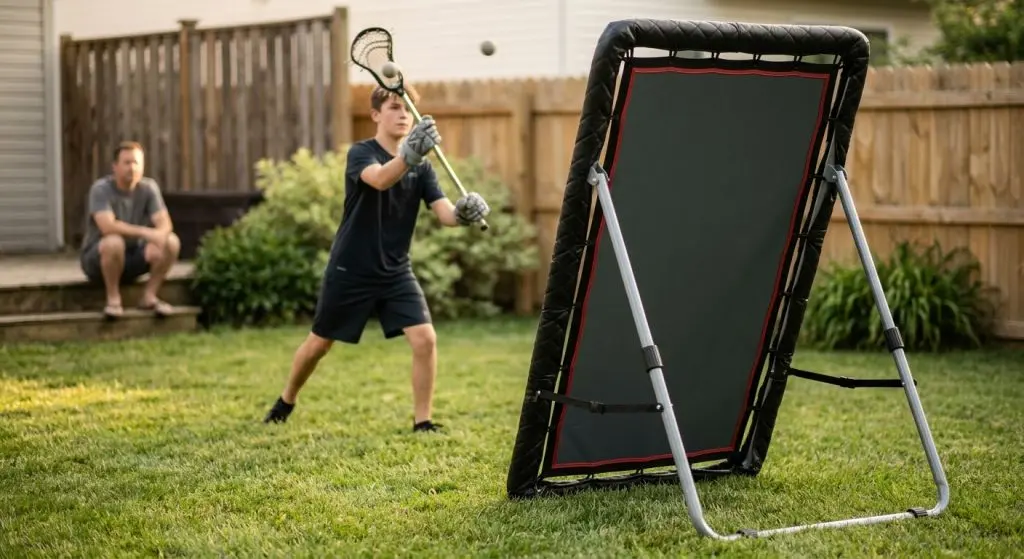
Space. The Gladiator Lacrosse® Wall Rebounder is 82 inches tall, 47 wide, and 55 deep set up, and it weighs about 60 pounds. It folds flat for storage, which genuinely helps. But it is not a thing you casually move in and out every day, and you want to look at your actual yard before you decide where it lives. The rebound surface is dampened, which is a real consideration if your neighbors are close.
Shipping on the big stuff. Gladiator states same-day shipping on orders placed Monday through Friday before noon, with ground orders shipping within 24 hours. Worth knowing before you order: the Professional goal ships LTL freight, and its product page says additional freight charges are required and that you’ll be contacted after checkout. That’s the honest situation with any large steel product from any brand, and it’s better to know going in. The backyard goals and the rebounder ship ground. The site also doesn’t ship to P.O. boxes. Full details are on the shipping information page.
The warranty is 90 days. Gladiator’s stated warranty covers manufacturing defects for 90 days from purchase, with repair or replacement at their discretion, and the buyer covers shipping on a claim. It excludes normal wear and tear. I’d rather tell you that than have you find out in month four. For a product that lives outside, plan on treating year-two maintenance as your problem, not a warranty question. Returns run through a return authorization number, which the returns page says is issued within five business days of a request.
There’s also a Katapult financing option offered at checkout if spreading the cost helps. The terms live with Katapult rather than on Gladiator’s site, so read them there before committing to anything.
The durability conversation nobody has
Anything that lives in a backyard in a real climate is in a slow fight with weather. Steel frames handle sun fine and rain mostly fine. What actually kills backyard equipment is the combination people don’t plan for: standing water at the feet, a full winter under snow, and nobody ever bringing it in.
The realistic version of taking care of it: fold it flat and put it in the garage or under cover over the off-season, keep the feet out of a puddle, and check the hardware at the start of each season the way you’d check anything with bolts in it. That’s most of the maintenance.
For a goal specifically, the net is the wear item, not the frame. Nets come in different twine thicknesses, and a thicker net simply survives outdoor life longer. That’s a durability decision rather than a rules requirement, and it’s a much cheaper thing to replace than a whole goal.
What you get for the hassle
Here’s the case for buying it, stated fairly.
The single biggest limiter on a young player’s development is touches. Team practice gives them a fraction of what they need, and it’s split across drills, water breaks, and standing in line. A kid with a rebounder in the yard can add hundreds of reps a week on their own schedule, without you driving anywhere, without another kid being available, and without a field being open.
That’s the whole value proposition. Not the steel, not the brand. Reps.
And it’s worth knowing that this is the product the company was actually built around. Gladiator Lacrosse was started in 2012 by Rachel Zietz, a 13-year-old player in Boca Raton whose coaches told her to practice against a wall as much as she could. The backyard gear she could find was either too expensive or fell apart from living outside. The rebounder wasn’t an accessory to the business. It was the reason for it.
If you want the more technical side of choosing between rebounder models, Gladiator’s own guide to choosing a rebounder goes deeper on surface size and adjustability than this post does. And if you’re newer to the sport generally, the parent’s guide to youth lacrosse covers the season-one questions this one skips.
Bottom line
If your kid already practices on their own, a rebounder is one of the better pieces of sports equipment you’ll buy, because it removes the excuse that there’s nobody to throw with. If they don’t practice on their own yet, buy a pack of balls, wait a season, and see what happens. The gear will still be there. The best signal you’ll ever get is a kid who goes outside without being asked, and no amount of steel manufactures that.
A Word on Gladiator Lacrosse
Gladiator Lacrosse makes lacrosse equipment built to survive actually being used, which traces directly back to how the company started. Rachel Zietz founded it in 2012, at 13, because the backyard gear available to her couldn’t take a Florida summer. The catalog today runs to official-size steel-framed goals, replacement nets in four twine thicknesses, NOCSAE-standard SEI-certified balls, shooting targets, and rebounders.
For a parent buying their first serious piece of practice equipment, the Gladiator Lacrosse® Wall Rebounder gives a 4′ x 3′ rebound surface with three adjustable angles and a dampened panel for small yards, and it folds flat between sessions. If you’d rather start smaller, a pack of official lacrosse balls is the cheapest thing you can buy that actually increases how much your kid practices.
You Might Also Like
- Wall rebounders — the full lineup and specs
- The parent’s guide to youth lacrosse — for the season-one questions
- FAQs — shipping, returns, net sizing, and assembly answered directly
FAQ
Is a lacrosse rebounder worth it for a beginner? Usually not in a first season. A beginner’s practice habit isn’t established yet, and a rebounder only pays off for a player who practices without being asked. Balls and a stick cover a first-year player’s needs. Revisit the question after a full season, when you can see whether the interest held.
What should I buy my kid first for backyard lacrosse? Balls, then a rebounder, then a goal, then a target. Balls are the cheapest way to increase practice reps, because a player who has to chase a single ball down the street stops after ten minutes. A goal is a bigger investment and a bigger footprint, and it matters most once stick skills are already developing.
How much space does a lacrosse rebounder need? The Gladiator Lacrosse® Wall Rebounder measures 82 inches high, 47 wide and 55 deep when set up, and folds flat for storage. Beyond the unit itself, allow throwing distance in front of it, typically 10 to 12 feet for standard reps. A dampened rebound surface makes it more workable in a small yard.
Can a lacrosse rebounder stay outside all year? It’s steel and built for outdoor use, but no backyard equipment improves from a winter under snow. The practical approach is to fold it flat and store it under cover in the off-season, keep the feet out of standing water, and check the hardware each spring. Gladiator’s warranty covers manufacturing defects for 90 days and excludes normal wear and tear.
Do lacrosse goals and rebounders ship free or by freight? Backyard goals and the rebounder ship ground via standard carriers, with Gladiator stating same-day shipping on orders placed Monday to Friday before noon. The Professional goal is the exception and ships LTL freight, with its product page stating that additional freight charges apply and that the buyer is contacted after checkout. The site does not ship to P.O. boxes.