Buy a bag of cheap lacrosse balls and there’s a decent chance that within a season some of them turn slick. Not dirty. Slick, like they’ve been waxed. The plasticizers inside the rubber migrate to the surface and leave a greasy film that changes how the ball sits in a pocket and how it comes off a stick.
Players call them greasers, and USA Lacrosse has written about them directly. They’re the physical reason the certification on your ball exists.
NOCSAE and SEI are two different organizations doing two different jobs. NOCSAE writes the performance standard for lacrosse balls, designated ND049, which sets requirements for weight, circumference, compression deflection load, and coefficient of restitution. SEI, the Safety Equipment Institute, is the independent body that tests balls against that standard, audits the factories, and maintains the public list of certified products. One writes the rules; the other enforces them.
That split is the whole answer, and almost nothing online explains it correctly.
What NOCSAE actually does
NOCSAE is the National Operating Committee on Standards for Athletic Equipment. It’s a standards-writing body, not a testing lab and not a certifier.
For lacrosse balls, the relevant document is ND049, the Standard Performance Specification for Newly Manufactured Lacrosse Balls. Its current revision is designated ND049-19m25. There’s a companion document, ND149, which is the laboratory procedural guide telling labs how to run the tests.
The standard establishes performance requirements across four properties:
- Weight — how heavy the ball is
- Circumference — how big it is around
- Compression deflection load — how much force it takes to squash the ball by a set amount, which is effectively its hardness
- Coefficient of restitution — how much energy the ball returns when it bounces, which is effectively its liveliness
Those four together describe a ball that behaves predictably. A ball that’s too light, too soft, or too bouncy plays differently and, in the case of hardness and rebound, carries different injury risk.
What NOCSAE does not do is test your ball. It writes the specification and licenses its seal. The testing is somebody else’s job.
What SEI actually does
SEI is the independent certification body, and its process is more involved than “sent a ball to a lab once.”
A manufacturer submits a certification package to an SEI-approved laboratory, which tests the product against the applicable NOCSAE standard. Before an initial audit can happen, the manufacturer has to submit a quality control and quality assurance plan for each product model, which SEI reviews against a checklist. SEI conducts manufacturing facility audits, with ongoing surveillance audits on a recurring schedule.
Then the important part: certification testing is conducted annually. Models produced since the last certification date have to be retested. And catastrophic noncompliance is grounds for terminating a manufacturer’s right to use the logo.
So certification is a maintained status, not a permanent badge. A ball model that was certified three years ago isn’t automatically certified today. The manufacturer has to keep passing. That’s a meaningfully stronger guarantee than a one-time test, and it’s the part buyers almost never understand.
SEI also maintains a public certified-product listing you can search yourself. USA Lacrosse points buyers to it directly as the way to verify a ball. If you’re ever unsure about a brand, that search is the authoritative answer rather than the marketing copy on the box.
What the rules actually require
Certification isn’t a nice-to-have at any real level of play.
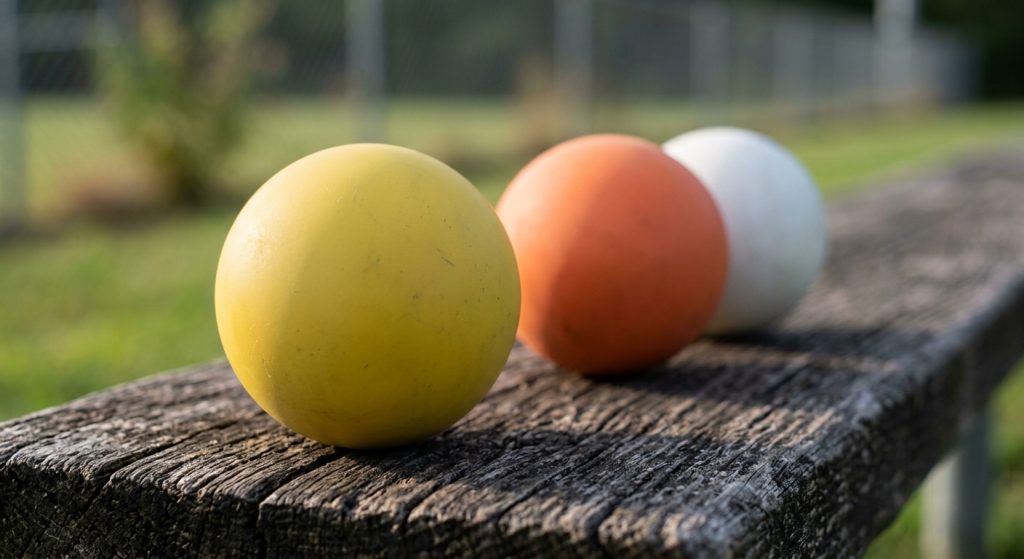
NCAA men’s play. Rule 1-16 requires the ball to meet the current NOCSAE lacrosse ball standard, and specifies the ball be white, yellow, orange, lime green or pink with a smooth or slightly textured solid rubber surface. Worth flagging, since a competing buying guide currently claims white is the only approved color for NCAA play. It isn’t.
Youth play. The 2026 USA Lacrosse Boys Lacrosse Youth Rule Book states plainly that balls meeting the current NOCSAE standard shall be used in all games. USA Lacrosse’s broader guidance goes further, recommending certified balls for practices as well as games.
Women’s play requires the same NOCSAE standard, but is narrower on color: NCAA women’s rules permit yellow or bright orange only, and girls’ youth rules add lime green. If you’re buying for the women’s game, that’s a real constraint worth knowing.
High school requires a NOCSAE-standard ball, but check with your state association for the specifics, since rule access varies and state associations can layer requirements on top.
Notice what those rules have in common: they require a ball meeting the current standard. None of them names a revision number. So you don’t need to match a revision code when you buy. You need a ball from a manufacturer whose certification is actively maintained.
How to tell a certified ball from a cheap one
Two things to look for, and they’re not the same thing.
The text on the ball. Since January 1, 2014, game balls have been required to carry labeling stating “Meets NOCSAE Standard” printed on the ball itself. The girls’ rules are unusually specific about it: the typeface has to be readable at 18 inches by a person with 20/20 vision. If you can’t read it at arm’s length, that’s a problem. Pick a ball out of your bag right now and look. It’s genuinely there on a certified ball.
The seal. Certified balls also carry the NOCSAE and SEI marking, and manufacturers are required to display a NOCSAE seal on exterior packaging under a valid licensing agreement.
And then the physical test, which is where the greasers give themselves away. Run your thumb across the surface. A certified ball is smooth or slightly textured but has grip. A greaser feels faintly waxy and slides. Once a ball reaches that state it’s done — it isn’t cleanable in any lasting way, and it’s changing how every rep with it feels.
USA Lacrosse has been blunt about this: cheaper balls that don’t meet the standard are still available in the marketplace, and there’s no guarantee of safety for balls that don’t meet it. A ball that fails the standard isn’t just an inferior product. Depending on where it fails, it’s harder or livelier than the game is designed around.
Why this matters more than it sounds
The obvious risk is being turned away. An official who spots uncertified balls in the sideline bag can refuse them, and if they’re the home team’s supply, that’s a real problem five minutes before a game.
The less obvious risk is training on the wrong equipment. A player who does hundreds of wall ball reps a week with slick, inconsistent balls is calibrating their release against something that doesn’t behave like a game ball. That’s a subtle way to build a small flaw into a lot of repetitions.
Gladiator’s lacrosse balls are 100% premium vulcanized rubber, meet NOCSAE standards, and are SEI certified, in singles through cases of 120. For a program stocking sidelines and practice bags, buying certified across the board means you’re never sorting the bag before a game, which is the practical version of why any of this matters.
Bottom line
NOCSAE writes the standard, ND049, covering weight, circumference, hardness and rebound. SEI independently tests to it, audits the factories annually, maintains the public certified list, and can pull a manufacturer’s logo rights. Rules at every real level require a ball meeting the current standard, so look for “Meets NOCSAE Standard” printed on the ball, and if something feels slick, retire it.
A Word on Gladiator Lacrosse
Gladiator Lacrosse was founded in 2012 by Rachel Zietz, a 13-year-old player in Boca Raton frustrated that the equipment available to her didn’t hold up. The catalog is lacrosse-only and spans official-size steel-framed goals, replacement nets in four twine thicknesses, shooting targets, rebounders and certified balls.
Every ball in the Gladiator Lacrosse ball lineup is 100% premium vulcanized rubber, meets NOCSAE standards and is SEI certified, available in white, yellow, orange and pink and in formats from singles up to cases of 120 for programs. A pack of six official balls is the sensible starting point for a player practicing at home.
You Might Also Like
- Official lacrosse balls — singles through cases, all NOCSAE standard and SEI certified
- Lacrosse goals — regulation 6×6 goals for backyard and program use
- FAQs — shipping, returns, sizing and product questions answered
FAQ
What does NOCSAE certified mean on a lacrosse ball? Strictly speaking, NOCSAE doesn’t certify — it writes the performance standard, ND049, which sets requirements for a ball’s weight, circumference, compression deflection load and coefficient of restitution. Certification is done independently by SEI, the Safety Equipment Institute, which tests to that standard. A ball described as meeting NOCSAE standards and SEI certified has been through both.
What’s the difference between NOCSAE and SEI? They’re two organizations with two jobs. NOCSAE is a standards-writing body that defines what a lacrosse ball has to do to be considered acceptable. SEI is an independent certification body that tests products against that standard, audits manufacturing facilities, maintains a public list of certified products, and can withdraw a manufacturer’s right to use the logo.
Do lacrosse balls have to be certified? At any sanctioned level, yes. NCAA Rule 1-16 requires the ball to meet the current NOCSAE lacrosse ball standard, and the 2026 USA Lacrosse Boys Lacrosse Youth Rule Book requires NOCSAE-standard balls in all games. USA Lacrosse recommends certified balls for practices too. High school requirements follow the same standard, though it’s worth checking with your state association.
How can you tell if a lacrosse ball is certified? Look for the text “Meets NOCSAE Standard” printed on the ball itself, required on game balls since January 1, 2014. The girls’ rules specify it be readable at 18 inches by someone with 20/20 vision. Certified balls also carry the NOCSAE and SEI marking, and SEI maintains a public certified-product listing you can search to verify a brand.
Why do cheap lacrosse balls get slick? The plasticizers in the rubber migrate to the surface over time, leaving a greasy film. Players call these greasers. A slick ball sits differently in the pocket and comes off the stick unpredictably, and it can’t meaningfully be cleaned back to normal. Meeting the NOCSAE standard is what separates a ball that holds up from one that does this.